top of page

Frequently asked questions
FAQs
The Kansas Night Hunters Association is dedicated to promoting safe, ethical, and responsible nighttime hunting practices across the state of Kansas. Our mission is to foster a community of passionate hunters who respect wildlife conservation and natural habitats while advancing the sport of night hunting. We aim to educate, empower, and connect hunters with the tools, knowledge, and resources they need to pursue their passion, ensuring that night hunting remains a sustainable and safe activity for future generations.
The Night Hunters Creed is a testament to the values and principles that we hold each and every member to. By becoming a member of KNHA each person agrees to the following Creed.
I firmly resolve, without reservations or equivocation, to uphold the following night hunting principles.
• That I will support national, state and provincial regulatory agencies and conservation organizations in the propagation and management of all game.
• That I will at all times actively support and promote hunting with night vision/thermal optics.
• That I will abide by current game regulations and at all times conduct myself as a sportsman so as not to bring discredit to the night hunting fraternity.
• That I will respect landowner’s rights.
• That I will enjoy the challenge of the hunt and will study the habits of the game I hunt.
• That I will legally use night hunting equipment and will only attempt to shoot game that is able to be taken by law with night hunting equipment.
• That I will only shoot at targets that I can positively identify with my night hunting equipment.
• That I will show respect for wildlife and considerations of the non-hunters view when publicly sharing pictures and videos online and on social media, as to not bring shame to the night hunting fraternity.
• That I will report any violations of wildlife regulations and laws that I observe or have evidence of to the proper authorities.
While we understand the public’s fear of deer being intentionally shot at night is a real concern, we feel that there is no evidence that this illegal activity is occurring at any significant level above the normal rate. There have always been unethical acts by poachers and unfortunately this will continue, but we do not feel that night time coyote hunters are the cause of these acts. Most night hunters will testify that they have too much to lose to engage in any illegal activity. We also feel that our presence in the outdoors at night serves as another deterrent to potential violators and our watchful eyes help to police these illegal acts. The same goes for other potential non-target wildlife species that may find themselves in the crosshairs. KNHA does not support any notion that intentionally shooting anything other than coyotes is acceptable. If there is documented evidence that this is occurring or becoming a known issue, we would like to work with the department to do our part to assist in curbing this issue to the best of our abilities. We understand it is difficult to regulate morality, but rules are put in place to protect the resource and that is what KNHA cares about.
Safety is of the upmost importance to KNHA members as we all want to see everyone return home safely each night. Not only the safety of night hunters but the safety of those sharing the outdoors with us at night and those who live and work in the rural areas that we hunt. KNHA feels that the Kansas hunter education program should include a segment related to night hunting. We are interested in reaching out to the department to see if we can collaborate on how to achieve this idea. KNHA would like to partner with KDWP to develop educational information pertaining to safety while night hunting, and have it added to the current curriculum in Kansas. We feel that this will help all hunters to have some basic understanding and knowledge of night hunting operations. In many cases the ability to see your surroundings at night can be enhanced through thermal optics. Many hunters report watching mice run through a stubble field or cross the road at distances not recognizable to the naked eye even during the day. Hunters report the ability to detect and identify livestock and other larger animals several hundreds of yards away and some cases beyond 1000 yards. This is something we feel that individuals must see to believe. KNHA will be offering live demonstration events following each commission meeting in the future for anyone to observe this for themselves. We feel that the more people that can experience this the better educated they will be when it comes to constructing and voicing their opinion on the safety of those in the area of night hunters. As in all hunting situations, hunters are ultimately responsible for where their bullets may land and what is beyond their target. In almost all situations night hunters are shooting a rifle from an elevated position where the firearm is securely attached to a tripod 4-5ft off the ground. This provides a stable shooting position where the path of the bullet is directed down towards the ground as it projects toward a target. Night hunters report that the majority of shots taken at coyotes are within 100 yards and often times much closer as identification becomes unmistakable to an experienced hunter. Most rifles and hunters are capable of accurately shooting a 1-2 inch groups at these distances depending on the time and effort the hunter takes to sight in and familiarize themselves with their equipment. Ethical and humane harvest of coyotes is achievable and highly likely in these situations. As in all aspects of hunting there are some that are proficient in their shooting abilities and spend the time and resources to practice these skills and have fostered the ability with the proper equipment to be successful at harvesting coyotes a greater distance, but this is not the norm for the majority of hunters. To help experienced hunters, and new hunters with opportunities to familiarize themselves with their equipment, KNHA plans to organize and offer range day events throughout Kansas where night hunters are able to bring their equipment and compete in friendly competitions at local gun ranges. These events often have demonstrations and viewing opportunities for people to check out different optics that are available on the market as well as offer hunters a chance to see what equipment others are using. KNHA invites anyone to attend these events and become more educated on the equipment and abilities of Kansas night hunters.
Trespassing was another concern that was reported as an important reason for opposing the expansion of the season. KNHA feels strongly that this is a concern that we can offer potential solutions to help minimize this activity. KNHA realizes that it is possible that reports of trespassing could be the result of mistake in identity. Failure to properly identify yourself and your actions could lead to false reports. To ensure that our members and any other night hunter is doing their best to identify who they are and what they are doing we are pursuing the development of a vehicle magnet that hunters can voluntarily adhere to the driver side door panel of their vehicle during night hunting activities that identifies them as a legal permitted night hunter, conducting predator control activities, with permission of the landowner. The reflective ID magnet would be noticeable from afar and also contain information provided by the hunter such as name and phone number. In the case that a person that encounters or sees a vehicle alongside the road with no one present, they can observe the signage and be aware of the activity of the hunter. KNHA feels that this is a good faith gesture toward providing the public with information about their activities in the area and assuring unsuspecting neighbors and law enforcement officers that proper preparations are in place to acquire permission from the landowner. In the event that an individual is knowingly trespassing on private property without permission KNHA fully supports law enforcement and landowners to pursue filing criminal trespassing/criminal hunting charges as necessary. KNHA views trespassing as a personal issue and the sole responsibility of the individual hunter to acquire proper permission prior to entering private property. Most people are aware that a few bad apples can spoil the cart, but we hope that policymakers will not judge a group of people based on the actions of a few.
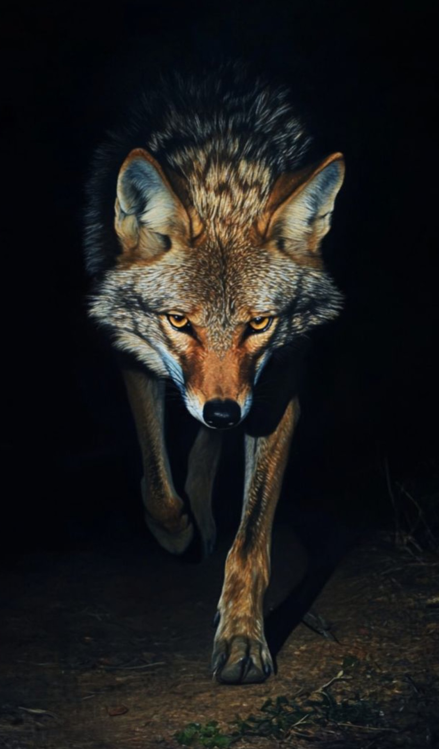
In Kansas coyotes are actually considered nongame, as a result of historic attitudes and the potential for conflict with the livestock industry. They are not afforded the protection of a harvest season like our furbearers, but their cunning and adaptability are legendary, and it is difficult to conceive a more resilient animal. Central to the controversy surrounding coyote hunting is the concept of fair chase. Traditionally, fair chase principles emphasize the pursuit of game animals under conditions that give them a reasonable chance to escape. However, the nature of coyote hunting, which often involves the use of electronic calls, spotlights, and other technology, has sparked debate about whether it aligns with these principles. Proponents of coyote hunting argue that technological advancements simply level the playing field between hunters and coyotes, mirroring the evolution of hunting practices over time. KNHA contends that responsible hunting methods, such as ethical shot placement and adherence to hunting regulations, ensure fair chase while addressing wildlife management needs. KDWP evaluated the fair chase debate as it relates to night hunting equipment in 2020 and determined that this hunting method did adhere to their standards and introduced into regulation a Kansas night hunting season beginning in January 2021. You will often hear from KNHA members and other night hunters that the coyotes we pursue are constantly evolving and becoming wiser to electronic calls and more cautious when approaching the sounds of potential wounded prey, even at night. This is testament that night hunting coyotes continues to provide challenges for hunters maintaining the balance of fair chase. Unlike many predators who face extinction, coyotes continue to survive and thrive in the face of persecution. Their survival is attributed to their intelligence, adaptability, and resilience, traits many Native Americans revered in the coyote as the trickster. As hunters and conservationists, it is essential to engage in thoughtful dialogue and consider the diverse perspectives surrounding this issue. By promoting ethical hunting practices and supporting conservation efforts, KNHA will continue to advocate for a sustainable future for both wildlife and hunting traditions.
The concept that hunting coyotes during the spring season causes increased rates of orphaned young was one of the least concerning reasons to oppose the extended season. Although, still rated moderately important, KNHA does recognize that leaving litters of pups without parents to raise them has the potential to create higher pup mortality. In the wild, the struggle for survival begins early. Coyote pups face high mortality rates 50-70%, with many not surviving their first year. Research suggests that ≥2 coyotes other than the mother often raise pups from a young age. It has been recorded that single female coyotes are capable of raising pups (Sacks and Neale 2001), so perhaps the survival of 8-week old pups without their mother should not be surprising given that other group members, such as the female’s mate and beta animals help raise young (Way et al. 2001). It is the belief of the KNHA that the extension of the night hunting season to continue during this time would not contribute to any higher mortality rates than already experiencing, and with the social structure and highly adaptive nature of the coyote this has not shown to be a limiting factor to their existence.
Technology has come a long way since the introduction of the Kansas night hunting season. Advancements in image resolution and quality has improved across the board with all the available products on the market. By listening to people speak publicly during recent meetings it is apparent that many people have not yet had the opportunity to gain personal experience with the equipment being used by Kansas night hunters today. KNHA realizes that this is an issue and will work to provide educational material and hands-on demonstrations for public viewing to help people better understand the capabilities of various devices being used. We feel that not only is thermal image quality important but also the ability to recognize animal behavior is essential in helping to identify coyotes from other non-target species at night. KNHA intends to provide educational information on how to properly ID animals with Thermal/Nigh Vision optics and typical animal behavior to its members and make these resources available to all hunters and the public.
bottom of page